Jeffrey Hadachek
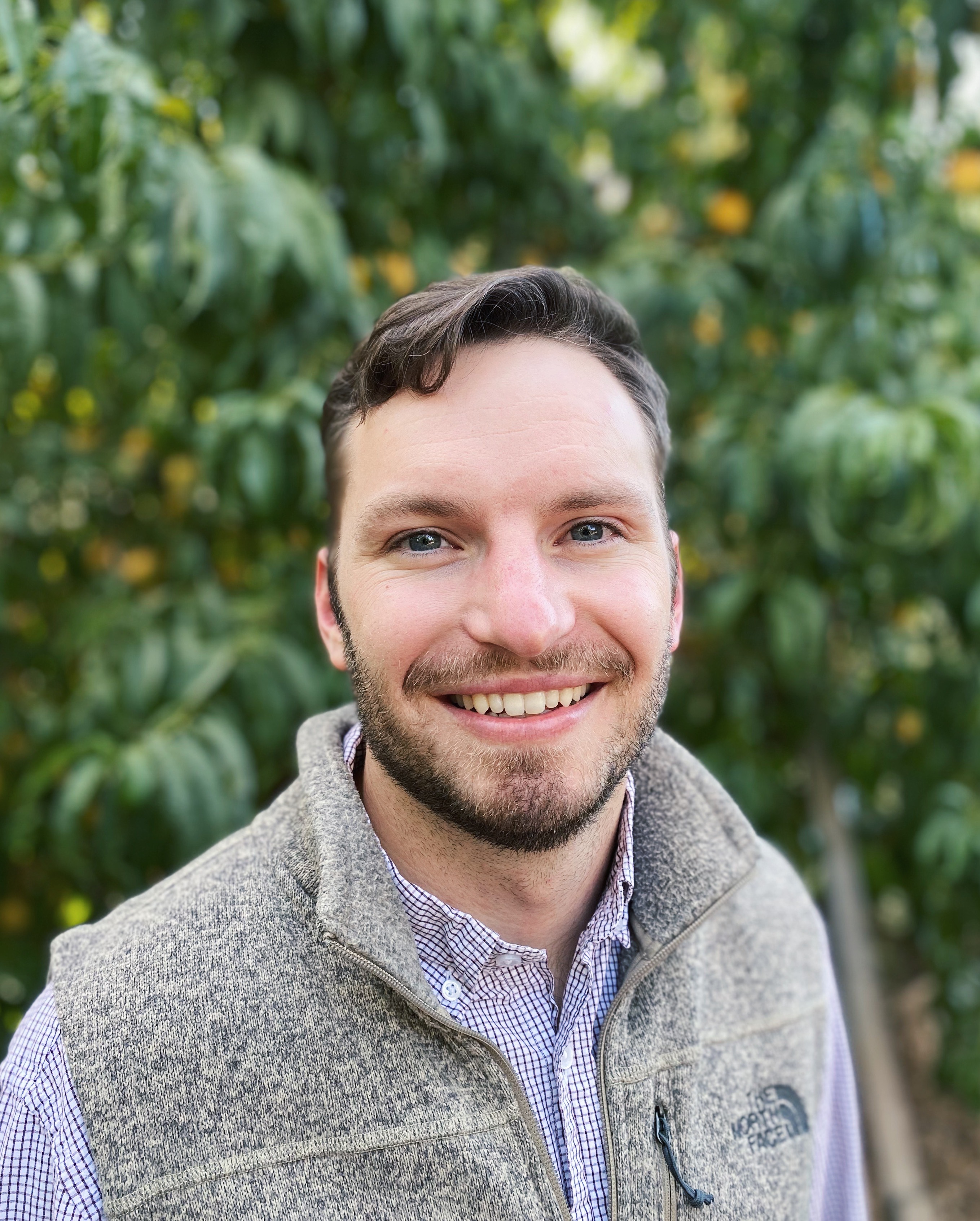
Biography
I am an Assistant Professor of Agricultural and Applied Economics at the University of Wisconsin-Madison. My research examines the efficiency and distributional consequences of agricultural production decisions, with a focus on water-related externalities and food supply chain organization. I have active projects on groundwater externalities from climate adaptation, the welfare effects of nitrate contamination in drinking water, nonpoint source pollution from crop production, and risk management incentives in agrifood supply chains.
Interests
- Agricultural Production
- Water Economics
- Supply Chains / IO
Education
🎓 PhD in Ag and Resource Economics, 2023 — UC Davis
🎓 BS in Agricultural Economics, 2018 — Kansas State University
Recent Publications
American Journal of Agricultural Economics, 2026
Journal of Public Economics, 2026
Journal of Environmental Economics and Management, 2026
American Journal of Agricultural Economics, 2024
Working Papers
August 2026
Abstract
The welfare gains from agricultural market integration are conventionally measured by the capitalization of market access into farmland values – an aggregate measure that omits parcels converting to non-agricultural use, which exit the Census of Agriculture’s sampling frame and render farmland values a lower-bound measure of welfare gains. Using the staggered rollout of the U.S. Interstate Highway System (1940–2002), we trace where the gains accrued. Farmland values rose about 11% after a highway arrived, masking a divergence between value and cultivated acreage: the least-suitable land was retained through a shift toward livestock, middle-suitability land lost crop acreage to conversion where development pressure bound, and the best land capitalized the development option into farmland value. Combining this heterogeneity with a Fréchet productivity model and a minimum-distance GMM over development-pressure bins, we identify the parcels the aggregate omits and value them at observed developer bids at as much as $195–210 billion, concentrated on the high-development pressure fringe.
September 2026 · Conditionally Accepted at AJAE
Abstract
Nonpoint source pollution from agriculture is the leading cause of nutrient pollution in the US. We investigate whether localized, farmer-led programs can cost-effectively reduce nonpoint source pollution by increasing the adoption of agricultural conservation practices. We study this in the context of an innovative program in Wisconsin that incentivizes farmers to take collective leadership of improving water quality in their local watersheds. Using a shift-share instrumental variables design, we find that a 10 percentage point increase in a subwatershed’s participating acreage in these programs leads to a 0.03 mg/L reduction (14%) in ambient phosphorus concentrations in local streams and rivers. We also show that a higher share of participating acreage in local watershed programs causes an increase in the adoption of cover crops, conservation tillage, and more diverse crop rotations. Importantly, this localized approach achieves water quality and conservation improvements at a substantially lower cost than existing federal subsidy programs, demonstrating the potential for bottom-up approaches to address nonpoint source pollution in other contexts.
May 2025
Abstract
Nitrate contamination of drinking water is a widespread concern and threatens human health. The magnitude of the health consequences depends on individuals’ ability to avoid exposure. This paper uses an event-study framework to uncover avoidance behavior and infant mortality outcomes following public notifications required by the Safe Drinking Water Act. Using store-level scanner data, I estimate that consumers spend $4.5 million annually on bottled water to avoid nitrate-contaminated drinking water. This protective behavior leads to 20 avoided infant deaths per year or $223 million in monetized benefits. These results underscore the benefits and role of environmental information policy in inducing avoidance of environmental hazards.
Teaching
AAE 636: Applied Econometrics I University of Wisconsin-Madison
Contact
- 📧 hadachek@wisc.edu
- 📞 785 527 1107
- 📍 329 Henry Taylor Hall, Madison, WI 53706
- 🐦 @hadachek